Top Container Offices for Modern Workspaces Are They Worth the Investment?
In recent years, container offices have gained popularity in modern workspaces. These innovative structures offer a unique solution for businesses seeking flexibility and efficiency. With their modular design, they can be easily transported and reconfigured. This adaptability is appealing to many companies facing space constraints or the need for rapid expansion.
However, the investment in container offices raises questions. Are they truly worth the cost? While they may seem a viable option, potential buyers must consider several factors. Durability, insulation, and overall aesthetics are essential aspects that influence their effectiveness.
Moreover, the container office trend is not without its challenges. Some may find the design limited or less inviting compared to traditional offices. Others may struggle with local zoning regulations. These considerations can complicate the decision-making process. Ultimately, assessing the true value of container offices is crucial for organizations aiming for a modern workspace.
The Rise of Container Offices in Modern Workspaces: A Market Overview
The rise of container offices in modern workspaces reflects a shift in how businesses operate. These innovative spaces provide flexibility and cost-efficiency. They can be used in various environments, from urban centers to remote locations, adapting to diverse needs. However, potential buyers must consider their unique requirements before investing.
Tips: Assess your space. Measure your available area before selecting a container office. Ensure it fits your vision. Research local regulations on container modifications. Compliance is crucial.
Container offices often come with minimalist interiors. While this can be appealing, practicality is equally important. Some companies feel cramped despite the sleek design. Finding the right balance between aesthetics and functionality is key.
Tips: Personalize your workspace. Adding plants or artwork can enhance the atmosphere. Consider sustainable materials for a modern touch. Reflect on the overall vibe you wish to create.
Cost Analysis: Are Container Offices More Economical than Traditional Spaces?
Container offices have emerged as a modern solution for many businesses. The key question remains: are they more economical than traditional spaces? An initial look shows a striking difference in cost.
Container offices usually require less investment than building or renting a conventional office.
For instance, setting up a container office can be done quickly. Construction delays are often minimized. However, this approach may involve hidden costs. Modifications for comfort and aesthetics might be necessary, such as insulation and plumbing. These factors could add up, so it's essential to plan carefully.
Moreover, the resale value of container offices can be unpredictable. While they may be cheaper upfront, the long-term financial implications must be considered. Some businesses find flexible work environments improve productivity, which can offset costs. Yet, personnel may feel disconnected in these unconventional spaces. Balancing functionality and comfort is a challenging task.
Sustainability Benefits of Container Offices: An Eco-Friendly Option for Businesses
Container offices are gaining traction in the modern workspace. They are often seen as a sustainable solution for businesses looking to reduce their environmental impact. These structures reuse shipping containers, transforming them into functional workspaces. This eco-friendly approach minimizes waste and promotes recycling.
Using container offices can significantly reduce carbon footprints. They require fewer materials than traditional buildings. Additionally, they can be placed in various locations, reducing transportation emissions. However, the insulation in these offices often needs improvement. This can lead to higher energy consumption if not addressed.
Another aspect to consider is their durability. Container offices can withstand extreme weather conditions. Yet, they may not always offer the comfort of conventional offices. Some users report issues with temperature regulation. Investing in container offices may require adjustments to meet comfort standards. Careful planning can help enhance their sustainability benefits while addressing these concerns.
Investment Comparison of Container Offices vs. Traditional Offices
This bar chart illustrates a comparison between container offices and traditional offices across several key investment dimensions. The data shows how container offices offer benefits in terms of initial investment, lower operating costs, superior sustainability impact, higher flexibility in space utilization, and greater design versatility, highlighting their potential as a worthwhile investment for modern workspaces.
Flexibility and Scalability: How Container Offices Support Changing Workspace Needs
Container offices are rising in popularity for modern workspaces. They are adaptable and cost-effective. Businesses can easily start small and scale as needed. This flexibility is crucial in today's fast-paced work environment. Companies can quickly change their space configuration to fit their evolving needs.
When considering a container office, think about your specific requirements. Are you planning to expand soon? Consider starting with a modular unit that can grow with you. Create a layout that encourages collaboration while allowing for privacy. Colorful designs can inspire creativity. However, ensure that the infrastructure supports your tech needs.
Tip: Always evaluate your location. Accessibility matters. A well-placed container office can enhance your team's productivity. Also, think about aesthetics. An office should inspire and motivate employees. Reflect on whether the investment aligns with your long-term goals. Is it truly the best choice?
Case Studies: Successful Implementations of Container Offices in Various Industries
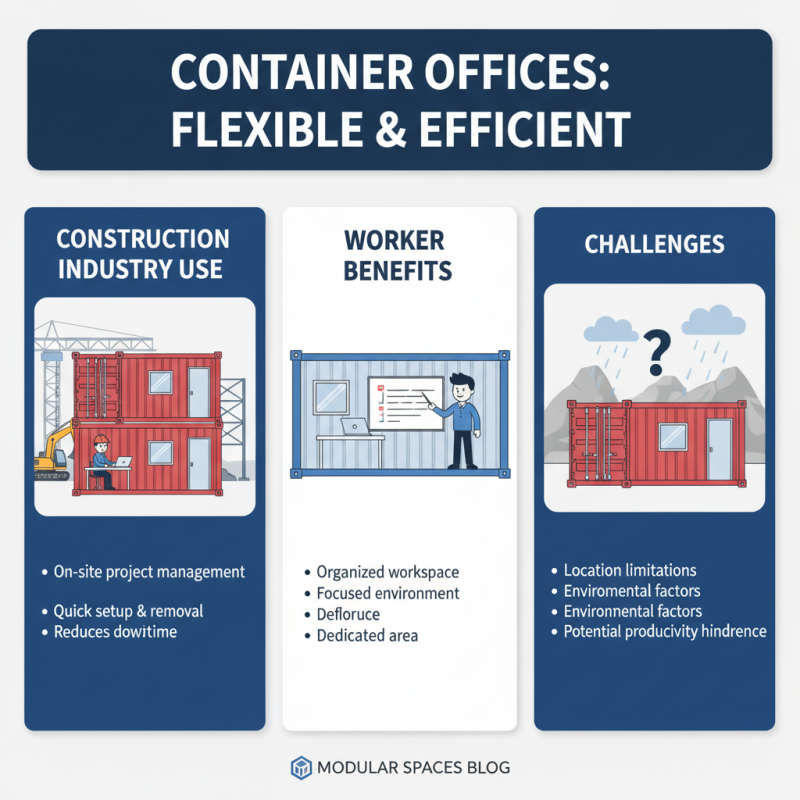
Container offices have gained traction in various industries, showcasing their flexibility and efficiency. In construction, for example, these modular spaces often house project managers and teams on-site. They can be quickly set up and removed as projects finish, reducing downtime. Workers appreciate having a dedicated area that keeps them organized and focused. Yet, challenges remain. Not all locations are ideal for such setups, and some environments may hinder productivity.
Retail has also seen a shift towards container offices. Stores are popping up in repurposed shipping containers, capturing consumer attention. They offer unique aesthetics and can be easily relocated. However, seasonal sales can make their effectiveness questionable. When foot traffic drops, maintaining these spaces can strain budgets. Some businesses may find that the investment doesn't always pay off in less busy seasons.
In the tech industry, remote working has led some companies to explore container offices as collaborative spaces. These installations provide a break from traditional office layouts. Teams come together in a fresh environment that encourages creativity. Yet, without proper planning, technology integration can become a hassle, disrupting workflow. Balancing innovation with functionality is crucial in these setups.