10 Essential Tips for Using Steel Shipping Containers Effectively
Steel shipping containers are versatile and practical solutions for a range of needs. They can serve as storage units, offices, or even homes. However, using them effectively requires planning and creativity. Understanding their unique features is crucial for optimal use.
When you consider steel shipping containers, think about their durability and adaptability. They withstand harsh weather and can be modified for various purposes. However, improper usage can lead to wasted space or inefficiency. It’s important to avoid common mistakes, such as underestimating ventilation needs or overlooking pest control.
Using steel shipping containers effectively is not just about functionality. It’s also about aesthetics. Simple modifications can enhance their appeal. Remember, the goal is to create a space that meets your needs while also being visually pleasing. Implementing these tips will help you maximize the benefits of your shipping container investment, ensuring functionality and style.

Tips for Selecting the Right Size of Steel Shipping Container for Your Needs
When selecting a steel shipping container, size is key. Start by assessing what you plan to store or transport. Containers come in various dimensions. Common sizes include 10-foot, 20-foot, and 40-foot options. A 20-foot container offers about 1,170 cubic feet of space. If you only need a few items stored, a smaller container may suffice.
Consider the dimensions of your goods. Will the container fit in your intended area? Check for access routes. Sometimes, larger containers require more space for transport. Think about future needs as well. If you anticipate growth, it might be wise to opt for a bigger size. However, don’t overestimate. A container full of unused space is wasted money.
Pay attention to the door openings. Some containers have double doors, while others have single ones. Do they provide easy access? Reflect on these details. It's easy to get excited about storage options, but it’s essential to match the container with your actual needs. Measure twice, buy once, so you don’t face costly mistakes later.
Comparison of Steel Shipping Container Sizes and Their Common Uses
Understanding the Structural Integrity and Durability of Steel Shipping Containers
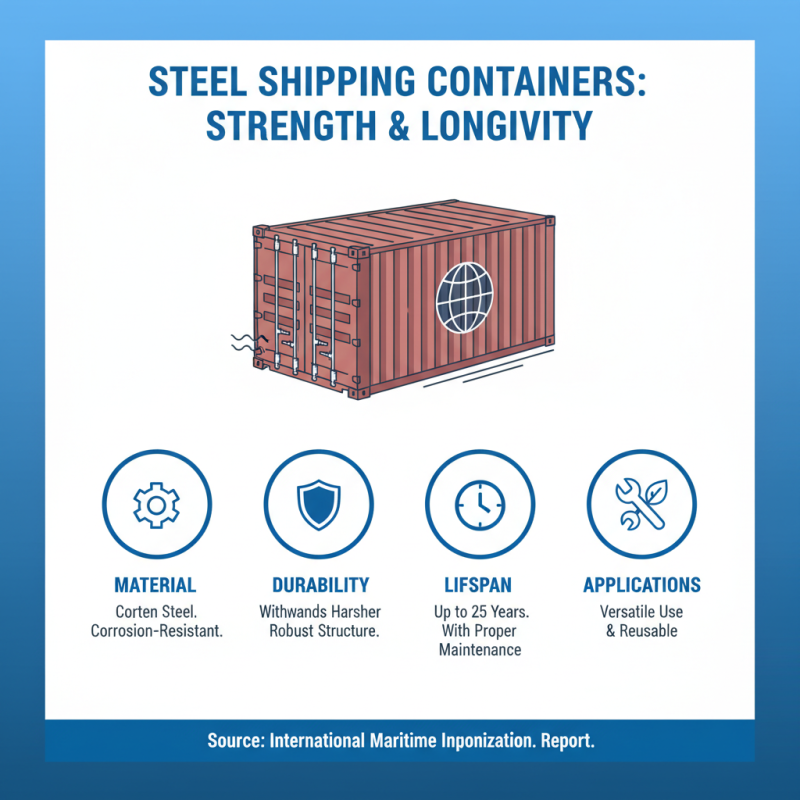
Steel shipping containers are known for their structural integrity and durability. Made from corten steel, they can withstand harsh weather conditions. According to a report from the International Maritime Organization, these containers can last up to 25 years with proper maintenance. This longevity makes them ideal for various applications.
However, not all containers are created equal. Variations in manufacturing processes can affect their strength. Some containers may show signs of wear much earlier than expected. Regular inspections are crucial. Reports from the Container Owners Association indicate that nearly 30% of shipping containers suffer from structural issues within their lifetime. This statistic highlights the importance of choosing the right container for your needs.
Environmental factors can also play a role. A study by the World Shipping Council noted that corrosion rates can increase in coastal regions. Saltwater exposure accelerates degradation. While steel shipping containers offer excellent durability, it is essential to be aware of their vulnerabilities. Proper care, such as using protective coatings, can extend their lifespan and effectiveness.
Maximizing Storage Efficiency: Organizing and Stacking Strategies for Containers
When using steel shipping containers, maximizing storage efficiency is crucial. Proper organization is key. Begin by categorizing items based on type or
frequency of use. This makes retrieval simple. Use clear labels on boxes or shelves
to enhance visibility. Small items should be placed in bins to prevent clutter.
Stacking strategies can save space. Ensure heavier items are at the bottom. This prevents damage and keeps everything stable. Consider using shelving units inside the container.
This allows for more height utilization. When stacking, don’t forget about weight distribution. Uneven loads can lead to shifting and potential accidents.
Take time to assess what you store. Regularly declutter to create space. Not everything needs to be kept. Also, revisit your organization methods often.
What worked a month ago may not be effective now. Stay flexible and open to change. Use every inch of the container wisely. Be creative in your approach to storage.
Assessing the Cost-Benefit of Modular Uses for Shipping Containers in Projects
When considering the use of shipping containers for various projects, it’s essential to weigh the costs against the benefits. The initial investment can vary significantly based on size and condition. A new container costs more than a used one. Yet, a second-hand unit might need repairs or upgrades, introducing unforeseen expenses. Calculate these factors early. Many overlook hidden costs, such as delivery and site preparation.
Modular uses of shipping containers can be incredibly versatile. They serve as offices, homes, or even pop-up shops. These applications can cut construction time and labor costs. However, custom modifications can add to the budget. Buyers often find that adding windows, insulation, or plumbing can escalate costs. It’s crucial to address these alterations in the planning phase. Otherwise, the project can become financially burdensome.
Investing in steel containers also has environmental advantages. They promote recycling by repurposing materials. However, some projects may face zoning challenges or require permits, which can delay timelines. Potential buyers should research local regulations to avoid unexpected hurdles. Even though using containers can be cost-effective, it’s a complex investment that requires thoughtful consideration.
Innovations in Container Modification: Enhancing Functionality for Various Applications
Innovations in container modification have greatly enhanced the functionality of steel shipping containers. These containers are now more versatile than ever, suitable for various applications. One common modification is transforming containers into mobile offices or pop-up shops. This change allows for efficient use of space in urban areas.
Tip: Consider insulation when modifying a container for temperature-sensitive items. An insulated container can maintain the internal environment effectively. Adding windows and doors can also improve accessibility and visibility.
Another exciting innovation is turning shipping containers into homes. Many people appreciate the minimalistic lifestyle these units promote. However, not all containers are ideal for living spaces. Some may have rust or structural issues that need addressing.
Tip: Always inspect a used container carefully before purchase. Look for signs of wear and damage. Repairing these flaws can be a potential challenge. Nonetheless, the rewards of functionality and sustainability make it worthwhile.